Learn
Reflections on what it means to live a good life—drawn from research, clinical work, and everyday experience.

Why is Family Important?
Call it a clan, call it a network, call it a tribe, call it a family. Whatever you call it, whoever you are, you need one. – Jane Howard...
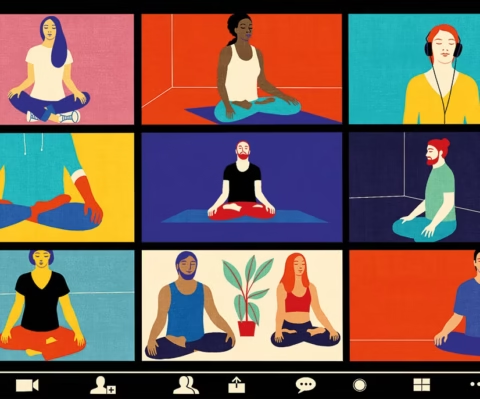
Buddhist Wisdom: Lion’s Roar Articles
Explore Lion’s Roar articles from Robert covering topics like mindfulness, compassion, and the nature of the mind. These articles provide valuable guidance on how Buddhist philosophy can help you cultivate a more mindful and fulfilling life. Explore this collection to gain a deeper understanding of how these practices can enrich your personal journey.

Harvard Study of Adult Development
The Harvard Study of Adult Development is an extraordinary scientific endeavor that began in 1938 and is still going strong (Waldinger is the fourth director, and Schulz its associate director). For over eight decades, the Harvard Study of Adult Development has tracked the same individuals and their families, asking thousands of questions and taking hundreds…

Diary of a CEO
In this moment, the director of the Harvard Study of Adult Development, the longest study of humans ever, Dr. Robert Waldinger gives the answers to some of the most important questions in life. Most people don’t know what they want are very bad at knowing what will make them happy, for instance, fame, wealth and…
-
On Purpose with Jay Shettyy
Today, I am talking to Robert Waldinger, a professor of psychiatry at Harvard Medical School, director of the Harvard Study of Adult Development, and co-founder of the Lifespan Research Foundation. Dr. Waldinger received his AB from Harvard College and his MD from Harvard Medical School. Dr. Waldinger is a practicing psychiatrist and psychoanalyst, and he…
-
Modern Wisdom
Robert Waldinger is a psychiatrist, psychoanalyst, Zen priest and Director of the Harvard Study of Adult Development, the longest-running study of adult life ever conducted. What makes for a good life? That was one of the main questions I asked myself when I began this podcast. A far easier solution would have been to speak…